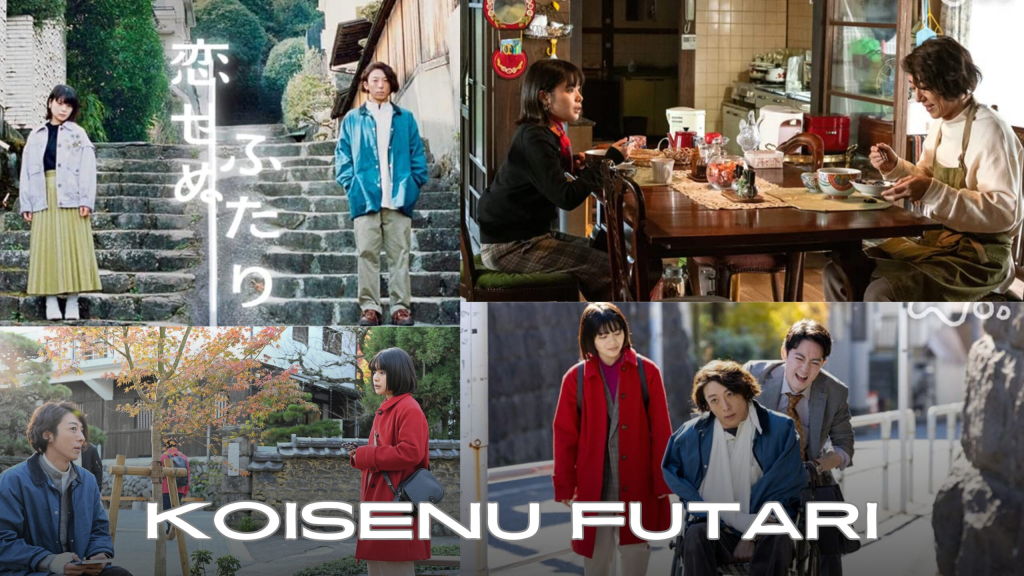
A few months back I was suggested a Japanese drama by a friend – Koisenu Futari (English Translation – Two People Who Can’t Fall In Love). It consists of 8 episodes with 25-30 minutes duration, making it really easy to binge. The drama as its name suggests is based on the journey of two people, a man and a woman who identify themselves as AroAce (Aromantic Asexual – one of the groups of the queer community) and therefore do not fall in love. The drama focuses on the hardships these characters face while accepting themselves and making the society understand about what it really means to be an AroAce.
This particular post would not be like my other review posts where I go into detail about the plot, the characters and my thoughts on the piece of media. In this article, I would like to focus on the general premise of the drama, how it represents the AroAce community and my thoughts on it. I hope that you will read the post with an open mind and try to understand the nuances of a community which is usually underrepresented in literature and the entertainment media.
The Premise
Sakuko and Saturo are two AroAce individuals who decide to live together as a platonic family, due to their respective personal reasons. The story showcases the difficulties they face due to their identity and orientation. The two individuals support each other through all the problems while also exploring various aspects of their identity and having acceptance for themselves and others.
Characters
Kodama Sakuko is a woman in her late 20s working in some company as a manager. She has a family that includes her mother, father and an elder sister who is married and is expecting soon. Sakuko is social and has some friends though they tend to leave her for one or the other reason. She had previously been in 2-3 unsuccessful relationships which have left a negative impact on her. Living up to the expectations of her family, peers and the society at large takes a toll on her mental health, leaving her miserable and alone. When she meets Takahashi Saturo, a man who works in a supermarket, and gets to know about her identity as an AroAce, she then tries to explore her personality, identity and preferences.
Takahashi Saturo is a man in his late 30s, working in a supermarket. He has severed all contact with his parents and used to live with his grandmother who has recently passed away. Saturo is quite introverted, outspoken in general matters and thus does not have friends. He had an unsuccessful relationship which was broken off mutually but without any closure. He has given up living by the standards set by the society long ago and wants to live according to his own values. He eventually meets Sakuko and offers assistance to her by making her his roommate and by providing valuable support in exploring her identity. In turn he gets support from Sakuko in his personal problems.
Matsuoka Kazu, a peer and work colleague of Sakuko is in love with her. They have a friendly relationship with each other, though they had dated in the past and had taken a break from the relationship as it was not working for them, especially Sakuko. They have similar tastes in food, music and general daily matters which Kazu mistakes as the valid reason for them to be in a romantic and sexual relationship with each other. In the beginning he struggles to understand why Sakuko refuses to be with him but lives with Saturo and thus he causes certain chaos in the main characters’ lives. Eventually though, he gives up the idea of getting back with Sakuko and remains friends with her.
The drama features other minor but important characters who add layers to the story.
My Thoughts
The drama has mostly been successful in representing the AroAce community and their struggles through the two main characters. If we think about the representation of romantic and sexual orientations other than the “normal” ones throughout the history; the identities on the Aromantic and Asexual spectrum have been less explored than other queer identities. Considering this, the drama has done well in exploring the story of AroAce individuals while giving some of the air-time for other characters and their problems too. Though the journey of the main characters as they navigate their respective lives along with each other, is exclusive to the characters in the drama, the issues faced by them are common to the AroAce community.
The world has recently started accepting some of the identities from the queer community, which includes gay, lesbian, intersex and transgender identities. The queer community as a whole is slowly being accepted in the society. But we can not ignore the fact that even though some of the identities from the queer community are being recognized and accepted by the society, some identities are still heavily judged, misinterpreted and ignored due to their supposed lack of actual impact on the lives of people. What I mean by that is – it is relatively easier to recognize and sympathize with the hardships of gay, lesbian, intersex and transgender communities than, let us say aromantic, asexual and aromantic asexual. People think it is easier to say that “I am just looking for casual sex without serious commitment” (aromantic), “I do not want to engage in a sexual relationship until both of us are serious” (asexual) and “I want to focus on my career/work right now and not get into relationships” (aromantic asexual).
The only response for all the above mentioned scenarios is “wait till you meet the right person”. The society holds the notion of romantic love (which entails sexual engagement) as the ultimate purpose of the human life, thereby invalidating the identities on the aromantic and asexual spectrum. The people on the aromantic and asexual spectrum face ‘Aphobia’ (prejudice against aromantic and/or asexual people) from both heterosexual and queer people, because the society expects, rather forces individuals to be in “romantic and sexual” relationships. And while doing this, the society also demeans the importance of familial and platonic relationships in the lives of individuals, which can be just as fulfilling as the “romantic” ones.
Thus, the drama has done very well in terms of characterization, problems faced by the particular community and how ultimately you have to take control of your life and live how you want to. Of course, the drama is not perfect and I have some issues with the direction and pacing of the narrative, but overall, I will say it is a solid watch – not excellent, but worth it.
Are you a part of the LGBTQIA+ community or an you an Ally? How would you support AroAce individuals and help to be a part of the society in a dignified manner?

Please share your thoughts!