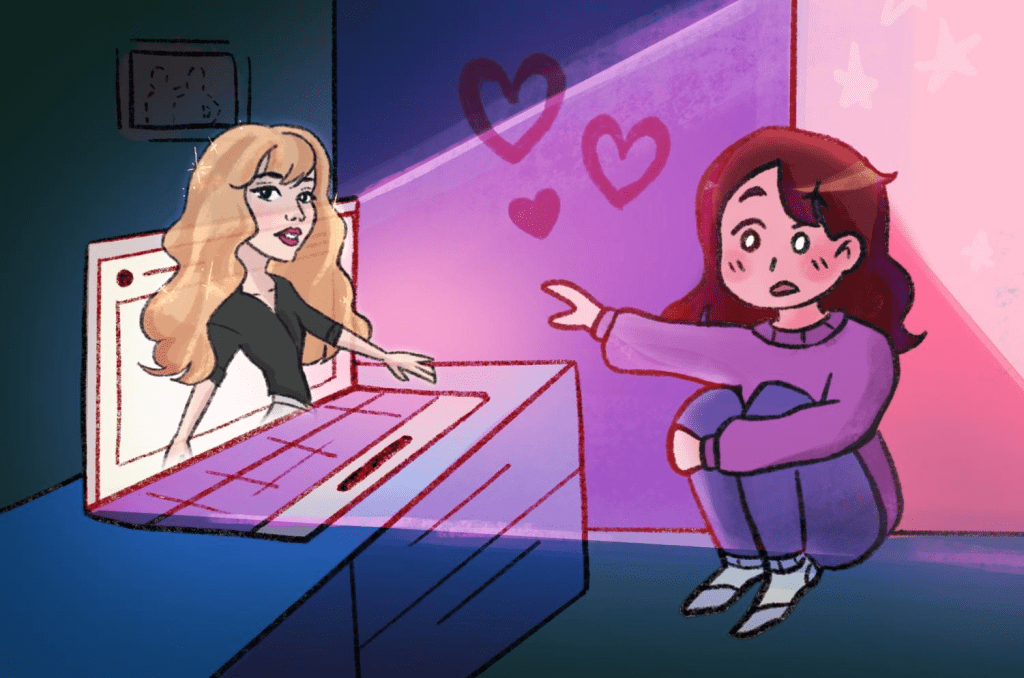
Recently, I read an article about how the celebrities face the negative consequences due to the parasocial relationships their fans have with them, and I thought I would discuss the topic here.
Nowadays every person is engaged or involved in at least one parasocial relationship and it is common for people to be in multiple relationships simultaneously. Social media and other digital platforms like YouTube, VLIVE and Weverse has definitely increased the amount of time people invest in the fictional and imaginary relationships with their favorite celebrities and artists. Thus, it becomes important to understand the phenomenon of Parasocial Relationships.
Definition and Nature
The term parasocial relationship was first coined in 1956 by Donald Horton and R. Richard Wohl, sociologists studying the psychological attachment formed from viewing television personalities. Parasocial relationships are one-sided relationships or bonds with people you don’t know intimately. The person in question is typically a celebrity, but it can also be a fictional individual — the protagonist of a book, a cartoon character or any video game character, thought it is not very common.
It is possible and understandable to get confused between the concepts of Fan Culture and Parasocial Relationships. It is possible that a Fan may form a deeper attachment to the subject of interest and later may engage in a Parasocial Relationship, but essentially, being in a parasocial relationship is different than being a fan of someone.
The Fan Culture is usually associated and concerned with the content that is being produced by the subject of interest. The relationship fans have with celebrities is typically more curated, somewhat distant, and based more on the economic and creative aspect of the content created by the artists, celebrities or influencers. A fan is someone who enjoys a celebrity’s music, films, or other work. They might be regular consumers of the celebrity’s content and may even follow their social media, but without being emotionally or psychologically engaged in the personal life of those “personas”.
A Parasocial Relationship on the other hand, is more psychological and emotional than being content-oriented. Parasocial relationships go beyond that, involving a sense of intimacy and connection with the figure, even though the connection is one-sided and the celebrity is unaware of the fan. They can feel like real friendships, with fans emotionally invested in the celebrity’s life, often to the point of feeling sad or proud of their achievements.
It is a long-term attachment to a media figure (a blogger, an idol, or even a politician) based on what a person “knows” or understands about that figure over time. People develop parasocial relationships based on repeated interactions with these figures on social media or on television that make them seem relatable and accessible rather than far away from us “regular” people.
Types/Categories
In 2006, researchers David Giles and John Maltby classified parasocial relationships into three subcategories: entertainment-social, intense-personal and borderline-pathological. The primary element separating these different types of affection is the amount of control you have over your feelings.
Entertainment-social Relationships
According to Giles and Maltby, the majority of parasocial relationships fall into the entertainment-social realm. In other words, you’re interested in a celebrity or character because you find them compelling, and because being their fan adds a layer to your life.
Maybe you’re a member of a fan club; maybe you and your friends enjoy gossiping about the latest scandal; maybe you seek out information about the celebrity in books, magazines or online communities. In short: You know that you don’t actually know person in question, but learning and talking about them is fun. There’s nothing wrong with that. In fact, it’s a great way to make new friends and learn new things.
Intense-personal Relationships
The second most common category of parasocial relationships is the “intense-personal” variety. Giles and Maltby describe this level of attachment as reflecting “intensive and compulsive feelings about the celebrity.” In such relationship, you understand your relationship isn’t real, but you’re not fully in control of your feelings for the person or character in question either. It’s much more than just a “celebrity crush”, it is a kind of obsession that makes you feel like the person — who you admire, who you most probably have never met in real life — is your soul mate, best friend or somebody who deserves to be worshipped.
People with intense-personal parasocial relationships may feel the need to check the celebrity’s social media every day, or struggle to focus on other things, like work or school. These intense emotions may prevent you from building close bonds with other people, or cause rifts when those around you don’t share your feelings.
Borderline-pathological Relationships
The least common and most dangerous form of parasocial relationship is the borderline-pathological type. In these situations, a person can no longer control their thoughts, feelings or (in some cases) their behavior. A borderline-pathological parasocial relationship may lead to stalking or violence directed towards oneself or others. This can lead to harassing the objects of fixation through constant, personal, uncomfortable texting and phone calls, visiting their house or roaming around it, sending them expensive gifts and expecting that the behavior will be reciprocated, etc. Violence can be committed in terms of assaulting their partners in real life, threatening to commit suicide if not acknowledged and appreciated, or even murdering someone to satisfy their fantasies.
Impact
The impact of Parasocial Relationships can be both positive and negative depending on your level engagement and involvement with subject of interest. Such relationships can be viewed as parameters of gaining insights into your psyche and emotional stability. If your Parasocial Relationships are healthy, it indicates that you are on the better side of the spectrum of mental health and wellbeing. But if your Parasocial Relationships unhealthy, it indicates that you need some kind of help or counselling in maintaining the emotional, mental and psychological balance.
If you engage healthily — you can escape the confines of reality for some time by seeing what your favorite people are doing, learn some important or interesting skill by following celebrities or influencers, build virtual and/or real-time relationships with fellow fans or people who share your parasocial engagement with the common subject of fascination. Parasocial Relationships are also considered a contributing factor in reducing loneliness, isolation and social anxiety and distancing.
Unhealthy engagement in the parasocial realm though, can severely impact the life of both the fans and the celebrities. This can manifest or reflect as — financial problems due to spending too much money on investing in the relationship and maintaining it, obsessing over the objects of fascination thereby forgetting to live your own personal life, facing issues in establishing and maintaining relationships in real-time, perpetrating different kinds of violence due to the blurring of lines between fantasy and reality.
Thus, it is extremely important to be able to set and maintain boundaries within the parasocial relationships you have. Otherwise, it will severely affect your own life and the life of other people.
What is your experience of parasocial relationships? How do you balance between constructive engagement and emotional detachment from the people you admire and follow?

Please share your thoughts!