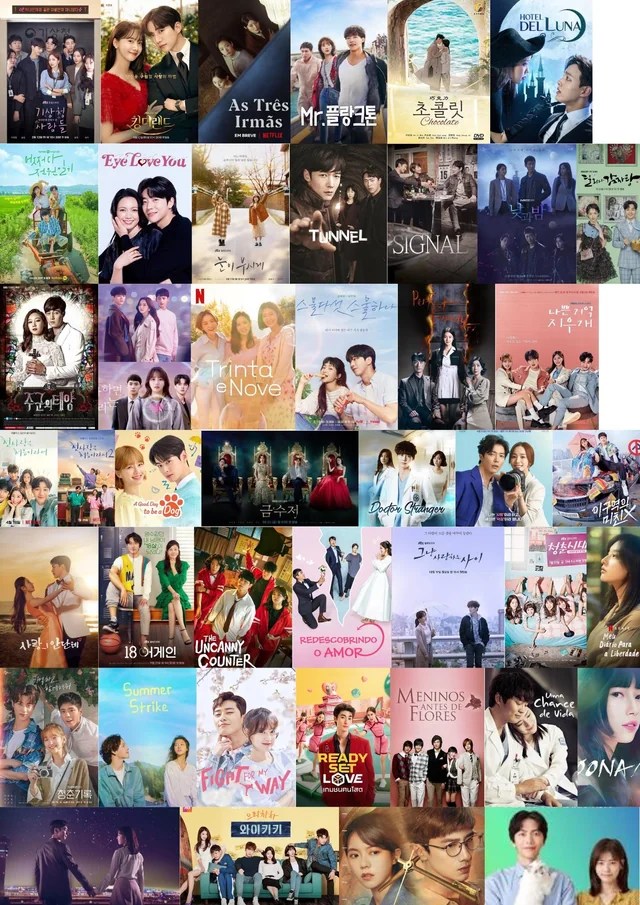
Kdramas have gained immense popularity in the last 2-3 decades and they will continue to be the one of the top content that the audience across the globe consumes. Though the Hallyu of the 1990s has had a significant impact on the increase in recognition of kdramas all over the world, that is not the only reason. In this post I will try to discuss the reasons for the popularity of kdramas and how such cultural content has become a positive negotiating tool and an economic asset for South Korea in the international market.
The Hallyu
Hallyu is a Chinese term meaning Korean Wave. The term was coined by the Chinese audience in 1990s when the kdramas began to be aired in China too. The reception of those dramas was off the charts and soon the dramas began to be aired in other neighboring countries like Taiwan, Thailand, Philippines and Japan. Roughly around the same time Kpop began to become famous, first regionally and then globally with the rise of Kpop groups like SHINee, EXO, BTS, BLACKPINK etc. This opened the door of Korean Culture to the entire world.
The Hallyu consisted of everything – Kdramas, Kpop, beauty products, fashion, food and drinks. The massive success of Hallyu depended upon the collaborations with other countries. For entertainment and music industry, the international streaming platforms such as Netflix, Amazon Prime, Rakuten Viki, iQIYI, YouTube, Weverse, etc. played an important role in increasing the availability and access. For the fashion industry and beauty products, ambassadorship for international brands such as Dior, Prada, Gucci along with invitations to the Paris Fashion Week, Milan Fashion Week, Met Gala, etc. put South Korea on the world market.
The South Korean government, with the financial aid of the United States, promoted various programs such as Student Exchange, Cultural Exchange, Multicultural Gatherings, etc. This helped the local industries to advertise their products, cultural heritage and tourist attraction places, with relatively less monetary investment. All of these factors together contributed to the global success of Hallyu. The Hallyu is reported to have three stages or phases with the current one being the third.
Appeal of Kdramas
As we all already know, Kdramas are popular not only in the Asian countries but also in Western and European countries. In this section I will try to look into the reasons for this popularity. What is it that makes them so engaging and worth watching?
Let us start with the storylines. It is no secret that the Korean literary and screenplay writers come up with the most unique storylines ever. Be it any genre, the Kdrama writers do not disappoint with the story, plot and the overarching themes that are explored through these dramas. They create drama-worlds where even the most absurd plots make sense ( only until we actually are in those drama-worlds, of course).
K-dramas are also often praised for their ability to weave social issues into their narratives, providing a commentary on contemporary life in South Korea. Many dramas tackle topics such as mental health, class and gender discrimination, and the pressures of societal expectations, offering viewers a glimpse into the challenges faced by individuals in a rapidly changing world. This makes the audience empathize with the characters going thorough such problems and the audience then roots for them as they try to overcome the obstacles in their way.
Along with the narratives, the characters of the drama-land are also unique to the South Korean Culture. Often we get to see flawed characters who throughout the story of the drama try to overcome their flaws and be better people. There is a huge focus on character development and positive character arcs in the Kdramas (the execution and the validity of said character development and positive arcs depends on the particular series; but the ultimate focus is becoming a better version of oneself). This helps the audience to connect with the characters because the audience as human beings themselves are trying to become better people.
Another aspect of Kdramas which makes them so engaging and universally appreciated, is the common themes they explore and represent. Themes of love, loss, family dynamics, community ties, complexities of human relationships, simple yet mundane life; are some of the commonly used themes in dramas. On the other hand, themes like revenge, crime, parallel universe, app programming; provide an escape from the hardships and mediocrity of life.
These themes are common and universal as all human being have experienced the situations where such themes can be applied. Even the less common themes of betrayal, revenge, fantastical elements resonate with the audience due to the way they are explored. Also, it is a standard for Kdramas to have multiple themes in a single drama. Even if the genre is set, the explorations of multiple themes keep the story happening and exciting.
A point similar to the above is the aspect of “emotions”. Pop-culture critic Jung Duk-hyun, known as the person who watches more television shows than anyone else in Korea, says that the ability of dramas to evoke strong feelings and stir emotions that leave long-lasting impressions on viewers; makes them so appealing.
“It’s not just watching a story unfold. You’re living it with the characters. And by the time they finally express their emotions, after all that build-up, it has a huge impact on the viewer. It’s like they drop an emotional anchor right into your heart. That’s the real power of Korean dramas, I believe.”, Jung Duk-hyun comments in one of his essays about Kdramas.
The significant investment in production quality is another standout feature. From stunning cinematography and meticulous set designs to impressive special effects, these shows are crafted with precision. The polished visual appeal adds a cinematic quality, elevating them beyond traditional television programming and captivating global audiences.
Music too, is an integral component of K-dramas, serving as a powerful tool to amplify emotional resonance and enhance storytelling. OSTs (Original Soundtracks) play a vital role in K-drama culture, with many series boasting memorable tracks that become chart-topping hits. The emotional connection between the music and the story often leads to songs becoming synonymous with specific dramas. These musical elements underscore pivotal moments, helping to convey complex emotions and intensifying the impact of key scenes.
A technical aspect in the allure and the increasing popularity of Kdramas is the availability and accessibility. Platforms like Netflix, Viki, and Amazon Prime Video have made it easier for international viewers to access a wide array of Korean content, eliminating geographical barriers that once restricted reach of these dramas.
One of the key advantages of streaming services is their ability to provide subtitles in various languages. This allows the non-Korean speakers to enjoy the content just like other people. (This is extremely important in the viewership statistics. I would really like to watch free Italian, French, Spanish and Russian content, but the sites which offer such content often do not have subtitles available; so I am forced to either not watch it or watch it but not understand it.)
Kdramas As Soft Power
The rise of K-dramas has sparked interest in Korean culture, language, and travel, solidifying their status as a cultural phenomenon. Enthusiasts are now eager to explore South Korea, visit filming locations, and even learn the language to immerse themselves in the culture that has produced such beloved entertainment. This exchange fosters a deeper understanding and appreciation of Korean traditions, societal norms, and contemporary life. Due to the interest in Korean customs, traditions and cultural heritage, many tourist spots have been reported to generate more revenue than before.
The increasing demand for Korean beauty, fashion, and food products has also promoted both national and international economic growth; elevating South Korea’s standing as a global trendsetter. As I have mentioned earlier, many fashion and cosmetic brands have been collaborating with the Kpop and Kdrama stars for advertising their products. Also the Kdramas have been proven to be great inspiration for fashion trends as the characters are diverse and wear clothes which suit them.
Websites like Fashion Chingu have the best knockoffs of the original wardrobe of the Kpop stars and Kdrama characters at discounts; generating large amounts of revenue which is shared with the brands and companies of the original clothes. South Korea has been reported to be the forth largest exporter of cosmetic products which have a huge demand and a fanbase in other countries.
The demand and production of food products like Ramyeon, Kimchi, Tteokbokki, Kimbap etc. has gone way up due to their constant mention in the Kdramas. All of this has contributed to the constant growth of their national economy and has increased their foreign reserves as a direct impact of the export of these goods.
Collaborations with international streaming platforms has impacted the way Kdramas are made. Today, the characteristics of the Korean Wave highlight its hybrid nature, blending traditional Korean culture with modern elements that appeal to a diverse audience. Korean dramas have succeeded in different regions for various reasons; Americans enjoy them for relaxation, Europeans for their intricate plots, Asians for lifestyle inspiration, and the Middle East for their emotional depth without explicit content. This helps the viewership statistics worldwide as the dramas produced are tailored to engage majority of the audience.
K-dramas thus, are being considered as a way to improve relations between countries, particularly in East Asia, as they can generate positive perceptions of South Korea. Some studies suggest that watching K-dramas can be associated with a more positive view of trade relations with South Korea. As cultural diplomacy grows, K-dramas serve as a bridge, promoting empathy and understanding on a global scale.
The State Government has always supported the production and distribution of Kdramas through various tax concessions, financial and trade policies and other cultural initiatives. Such measures have helped the government to foster favorable relations with other Asian and Western-European countries.
The future of Kdramas in global media is bright and full of potential. With further opportunities for international collaborations, innovation in all aspects of production and meaningful storytelling; Kdrama creators are in the position to expand their influence and reach even more regions. As audiences continue to embrace Kdramas, they will undoubtedly remain a vital part of the global entertainment landscape for years to come. This indirectly will help South Korea to maintain and solidify its position in the international relations scene and pursue amiable relations with countries all over the world.
I hope that this post has given the readers some insights into the seemingly sudden popularity of Kdrama across the globe and how Kdramas are not just another tool for entertainment but have a significant impact as a soft power of the country of South Korea.

Please share your thoughts!