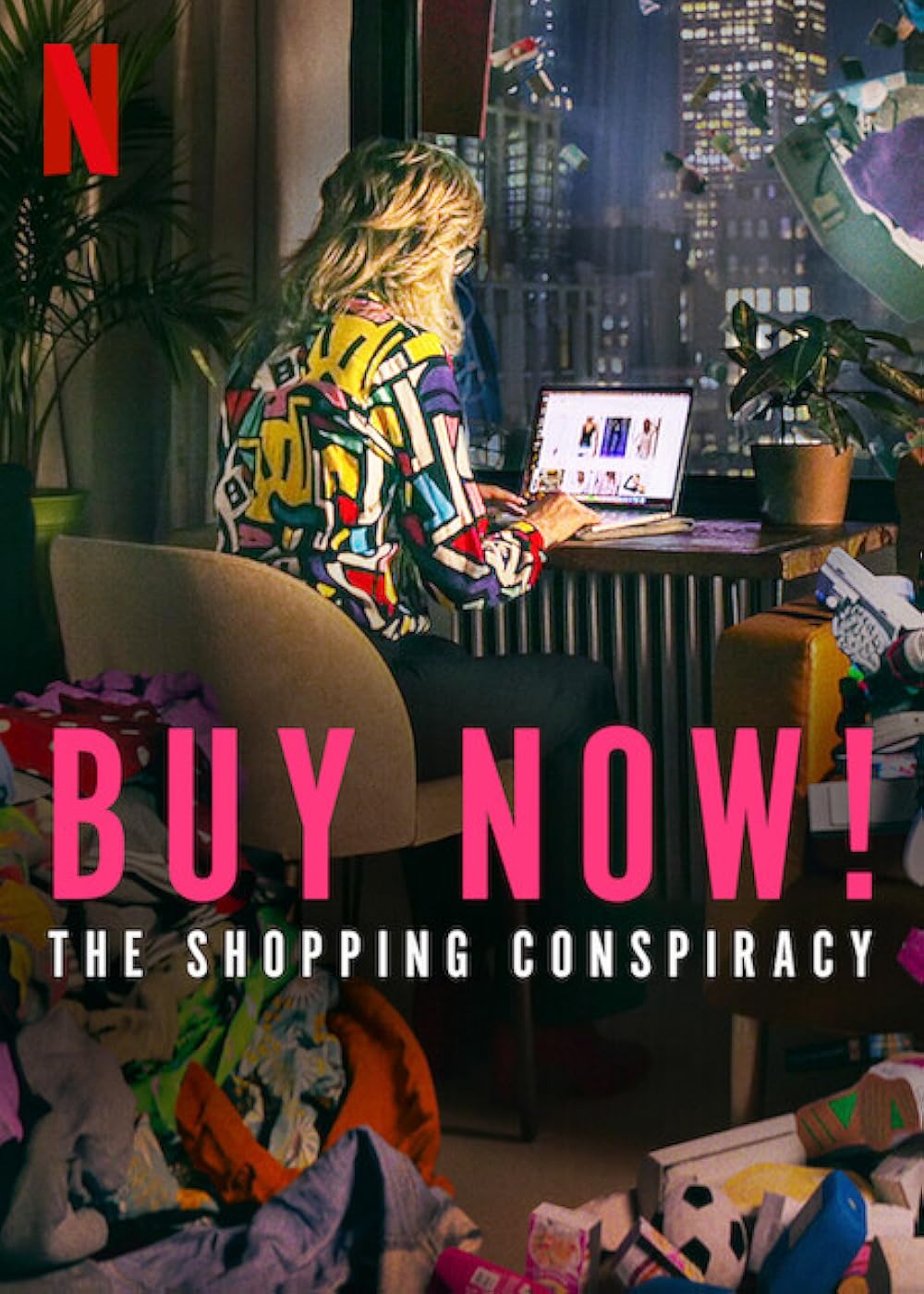
“Buy Now! : The Shopping Conspiracy” is a thought-provoking documentary on Netflix which focusses on the strategies the big corporations apply to get people to buy more, even though they do not really need the products.
The documentary also discusses the negative impact of the shopping industry on the environment through generation of tons of waste, most of which is nonrecyclable. The documentary taps into interesting themes to explore the techniques used by the companies for profit maximization.
- Sell more
- Waste more
- Lie more
- Hide more
- Control more
Sell More
The principle of Sell More depends on three main aspects :
- Creating new objects and products that the customers desire
- Creating strategies to encourage Impulse Buying and shopping based on FOMO
- Making access to and supply of desired products easier, more efficient and more convenient.
Profit maximization depends on many reasons, one of them is the strategy to keep the time between the demand and supply of the desired product extremely short. The customers should get the desired product quickly. One-click buying is another way to make people buy more. It refers to a feature on the online shopping websites and platforms, which allows the customers to make purchases with a single click. A single button called One-click Buy or Buy Now is given; which eliminates the need to go through multiple steps. The significance of the title of the documentary – Buy Now – is evident here.
The online platforms and websites are regularly updated with Discount Offers, Sell Offers, Exclusive Benefits Offers and many more. This is used to induce impulse buying based on the fear of missing out on some of the most exclusive and premium offers. Doorstep Deliveries or home deliveries also encourage people to buy at a faster speed and on the grand scale, because they only have to order the product and it will reach their home.
Waste More
Some methods that are used to induce people to buy newer products and discard their previous ones, include :
- Launching newer versions of the same product with the promise of a Perfect Product and Advanced Features
- Deliberately creating opportunities in products to stop working quicker
- Making the cost of repairs more than actually buying the product.
The brand image, that is the perception of the brands in the mind of the customers is very important to make them buy more products of the same brand. This too is intimately connected with the theme of Waste More.
- The big companies of the shopping industry deliberately dump their products (literally in the garbage bags); so that they can produce more.
- Sometimes the brands destroy or damage their own products before throwing them out; so that people cannot use those dumped products.
- But, all of this is done secretly and the customers are kept in the dark about this. They are led to believe that a particular store or brand is so popular that all of its products get sold immediately.
- This deception makes people buy more products from the brand or the store.
Lie More
In order to make the products look more appealing, truthful and best in the eyes of the customers, the companies lie again and again. Nowadays, environmental concerns, sustainable development and Green products are in trend. The customers like to believe that the products they are using are eco-friendly and do not harm the environment.
Therefore, brands use Greenwashing. It is a method where the products are shown as healthy, eco-friendly and recyclable when in really they are not. For example, making the packaging of the products excessively green. Or another strategy is to stick fake recyclable labels on the products; so that people can buy them without feeling guilty.
Hide More
The garbage generated by the big companies is in the amount of tons. Waste management is an important part of the shopping conspiracy. The waste generated during the production of the products, waste generated due to the deliberate dumping by the companies, waste generated after people throw away the used products; all of this garbage needs to be disposed off without letting the customers know.
The countries in the world are divided according to their specialization in disposing the waste. The waste generated by the corporations is exported to the particular countries where it is disposed off quietly. For example, clothes are dumped on the seashore in Ghana, while the electronic waste is exported to Germany.
Most of the dumped waste is non-biodegradable and remains on the surface of the earth for years. Plastic and electronic waste is even harder to dispose off as it does not dissolve in the soil at all. The impact of all of this dumped garbage is disastrous and dangerous to the environment and ultimately us. But hiding these effects from the customers helps the brands to produce and sell more, increasing their profits.
Control More
The theme of control more acts as a safety net for these big brands. They curate a story, a narrative and push it forward until it feels as the ultimate truth. Any other person, group, organization saying otherwise or contrary to the set narrative of the company is brutally controlled through legal consequences, financial ruin, moral degradation, threatening and any other possible method. Anything and anyone that goes against the company is thoroughly destroyed while hiding all of this from the customers and stockholders of these companies.
The documentary ends with the summary of how the big companies and brands fool the customers into buying more products even if there is no actual need. The strategies employed by these brands are so sleek and misleading that the customers rarely realize the deception they are faced with.
The documentary makes the audience think about their own shopping patterns and choices. The responsibility of making these brands grow more by unethical means, partly lies on the shoulders of the consumers. There is no getting away from the guilt and responsibility of falling prey to the convincing yet slightly discernible strategies of the big brands.
I would like to ask the readers of this post, Are you a part of this shopping conspiracy? Maybe not as an instigator but as a contributor? What are your shopping patterns? Do you regularly fall prey to these schemes played by the brands?

Please share your thoughts!